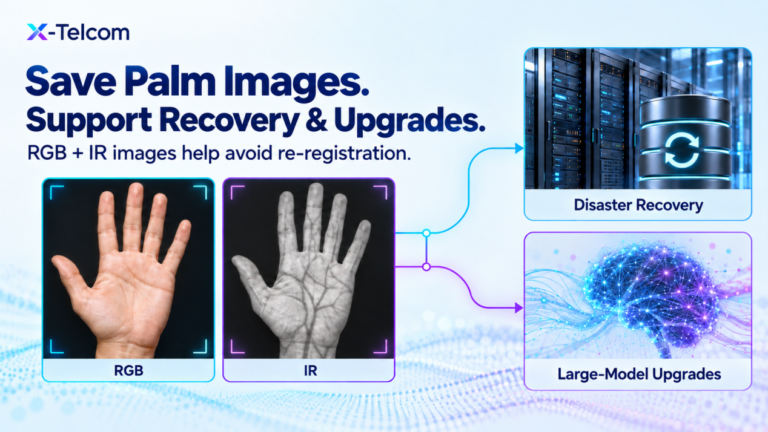
Why Saving Palm Images Matters for Disaster Recovery and Algorithm Upgrades By X-Telcom

Why Saving Palm Images Matters for Disaster Recovery and Algorithm Upgrades By X-Telcom

When developing a Palm Vein Recognition system, it is easy to focus on the feature vectors used for biometric matching. However, the original palm images captured during registration also have an important long-term role. Securely retaining both the RGB palm print image and the infrared (IR) palm vein image gives your system source data from […]

Read More →
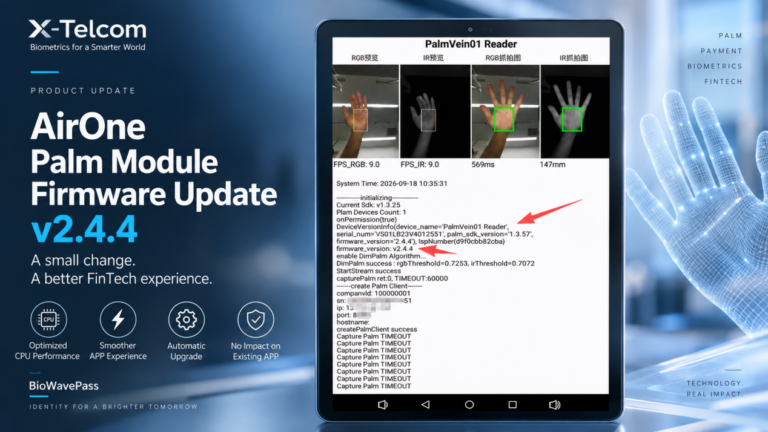
AirOne Palm Payment POS Firmware Update: Better CPU Performance for Palm Vein Recognition and FinTech Apps

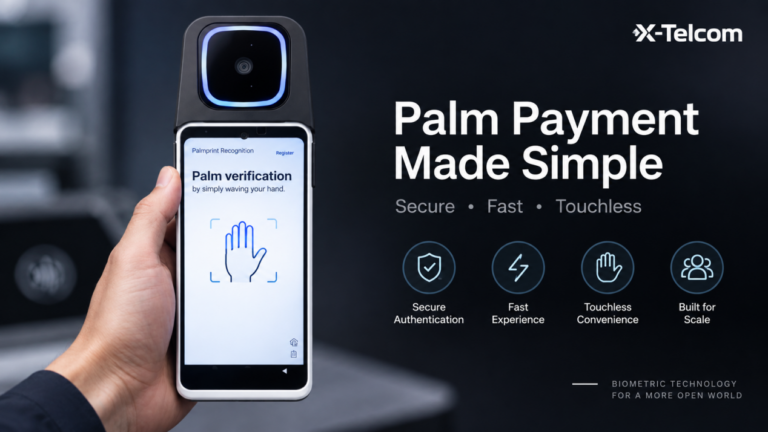
AirOne Palm Payment POS Firmware Update: Better CPU Performance for Palm Vein Recognition and FinTech Apps

X-Telcom has released a new non-streaming firmware update, version v2.4.4, for the palm recognition module used in the AirOne Palm Payment POS. The update changes how the palm biometric module uses system resources. Instead of continuously streaming camera data, the module now streams data only when a palm is detected. It sounds like a small […]

Read More →
Palm Vein Scanner Web Development: Integrating X-Telcom PalmVein01 with a Web Application

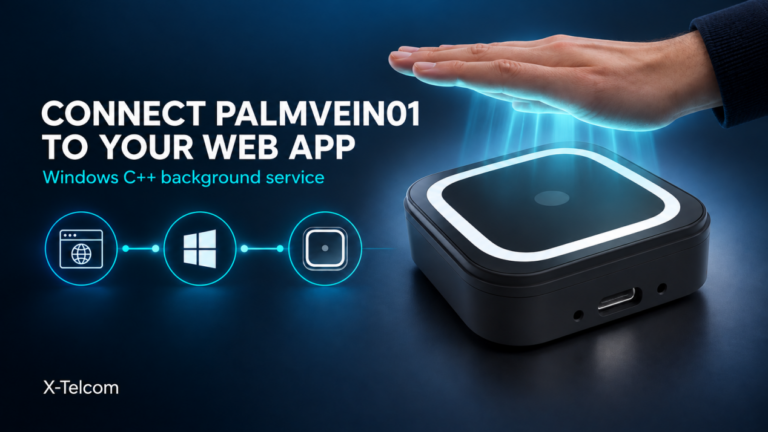
Palm Vein Scanner Web Development: Integrating X-Telcom PalmVein01 with a Web Application

Can a web application control the USB Palm Vein Scanner PalmVein01 directly? X-Telcom does not currently provide a Web SDK, so a browser cannot control the [PalmVein01] directly. For Palm Vein Scanner Web Development, one approach is to build a Windows background service with X-Telcom’s C++ SDK. The web application sends requests to the service, […]

Read More →
What FinTech Companies Should Consider When Choosing a Palm Vein Payment Solution

What FinTech Companies Should Consider When Choosing a Palm Vein Payment Solution

As biometric payment moves from concept testing to real-world deployment, more FinTech companies, payment service providers, banks and digital wallet operators are exploring palm vein payment technology. However, choosing a palm vein device is not simply about comparing hardware specifications or recognition speed. For a FinTech company, the more important question is: Can this biometric […]

Read More →
How to Choose a USB Palm Vein Scanner: PalmVein01 vs PalmVein01 Pro

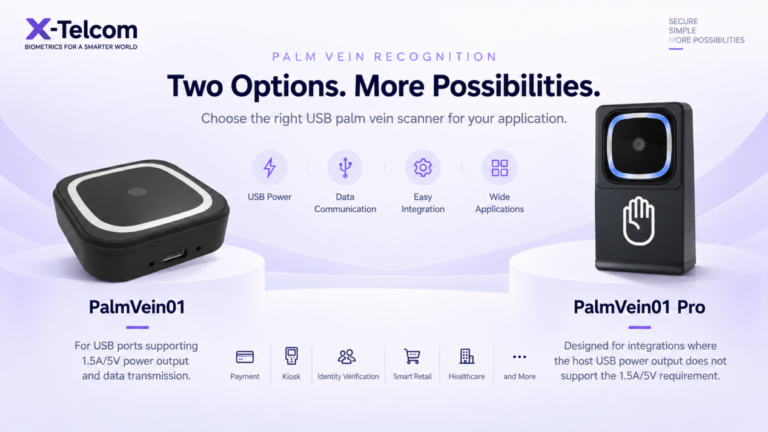
How to Choose a USB Palm Vein Scanner: PalmVein01 vs PalmVein01 Pro

Integrating a USB palm vein scanner may appear straightforward: connect the scanner to the host device, integrate the SDK and start palm recognition. In practice, one of the most common integration problems has nothing to do with the palm vein recognition algorithm. The problem is often the USB port. Before selecting an external palm vein […]

Read More →
Before Connecting a Palm Vein Scanner to a POS Terminal: What You Need to Check

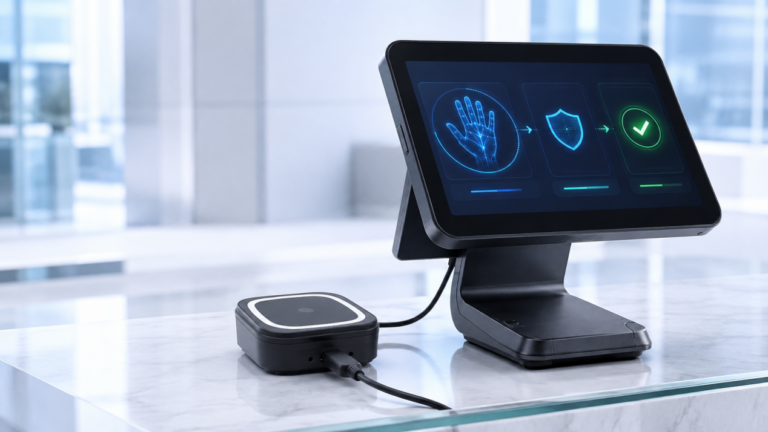
Before Connecting a Palm Vein Scanner to a POS Terminal: What You Need to Check

Palm vein recognition gives customers a fast and contactless way to confirm their identity during checkout. Yet adding palm recognition to an existing financial POS terminal is not always as simple as plugging a scanner into an available USB port. The physical presence of a USB interface does not guarantee that the port provides enough […]

Read More →
Palm Payment Goes Live in Azerbaijan: MPAY Brings Biometric Payment into Everyday Life

Palm Payment Goes Live in Azerbaijan: MPAY Brings Biometric Payment into Everyday Life

Palm payment is moving from technology demonstrations into real-world payment environments. In Azerbaijan, MPAY has officially launched palm payment, giving users a new way to authenticate payments without needing to take out a physical card or mobile phone at the point of interaction. For X-Telcom, this is an important example of where biometric payment technology […]

Read More →
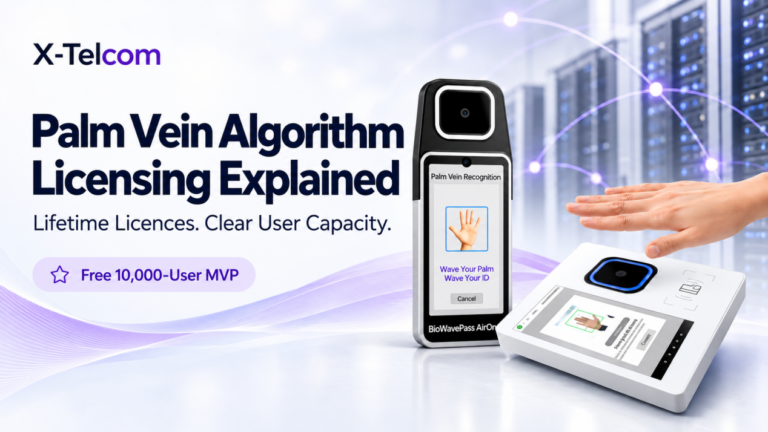
From MVP to Scale: X-Telcom Launches Free Large-Scale Palm Vein License Program

From MVP to Scale: X-Telcom Launches Free Large-Scale Palm Vein License Program

Moving a palm vein solution from a successful MVP to commercial deployment requires more than hardware. Partners also need the ability to test recognition performance, server architecture and user capacity at a meaningful scale. To support this next stage, X-Telcom is introducing a dedicated Large-Scale Palm Vein Algorithm Support Program for qualified strategic partners. 50,000–100,000 […]

Read More →
How Palm Vein Recognition Works: From NIR Imaging to Biometric Matching

How Palm Vein Recognition Works: From NIR Imaging to Biometric Matching

Palm vein recognition is becoming increasingly relevant for e-KYC, digital identity, banking, biometric authentication and palm payment. But how does a palm vein recognition system actually work? Unlike conventional fingerprint recognition, palm vein technology uses near-infrared (NIR) imaging to capture vascular characteristics beneath the skin. X-Telcom’s palm recognition technology goes further by combining NIR palm […]

Read More →
Palm Vein Recognition Accuracy: Understanding FAR, FRR, Liveness Detection and Large-Scale Matching

Palm Vein Recognition Accuracy: Understanding FAR, FRR, Liveness Detection and Large-Scale Matching

As palm vein recognition moves from small biometric projects into large-scale e-KYC, digital identity, biometric authentication and palm payment applications, one of the most important questions is: How accurate is palm vein recognition when the number of registered users becomes very large? For a biometric system, accuracy cannot be measured by a single percentage. Factors […]

Read More →