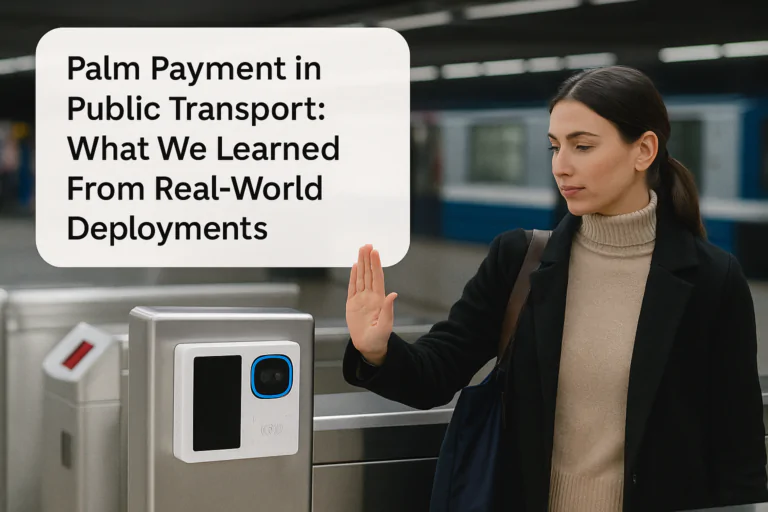

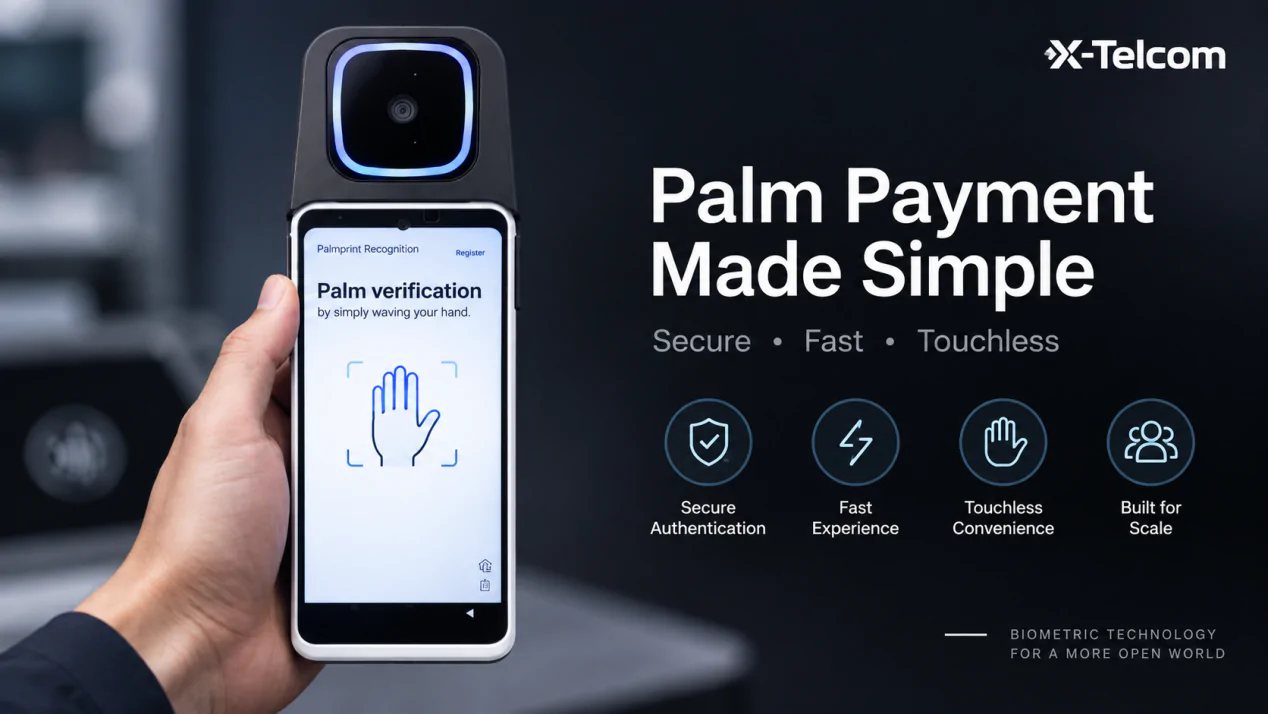
As biometric payment moves from concept testing to real-world deployment, more FinTech companies, payment service providers, banks and digital wallet operators are exploring palm vein payment technology.
However, choosing a palm vein device is not simply about comparing hardware specifications or recognition speed.
For a FinTech company, the more important question is:
Can this biometric solution securely integrate with our existing payment infrastructure and scale from an MVP to hundreds of thousands or even millions of users?
At X-Telcom, our palm vein recognition architecture is developed with payment and FinTech applications in mind.
Here are some of the key factors FinTech companies should consider when selecting a palm vein payment solution.
1. Recognition Accuracy: FAR and FRR Matter
For payment applications, biometric accuracy is fundamental.
Two important indicators are:
- FAR (False Acceptance Rate): The probability of incorrectly accepting an unauthorized user.
- FRR (False Rejection Rate): The probability of incorrectly rejecting an authorized user.
A low FAR is particularly important because biometric authentication may ultimately be connected to a financial transaction.
FinTech customers should therefore ask suppliers for actual FAR/FRR testing information, rather than relying only on general claims such as "high accuracy" or "AI-powered recognition."
2. Anti-Spoofing and Liveness Detection
Payment environments require more than simply recognizing a palm.
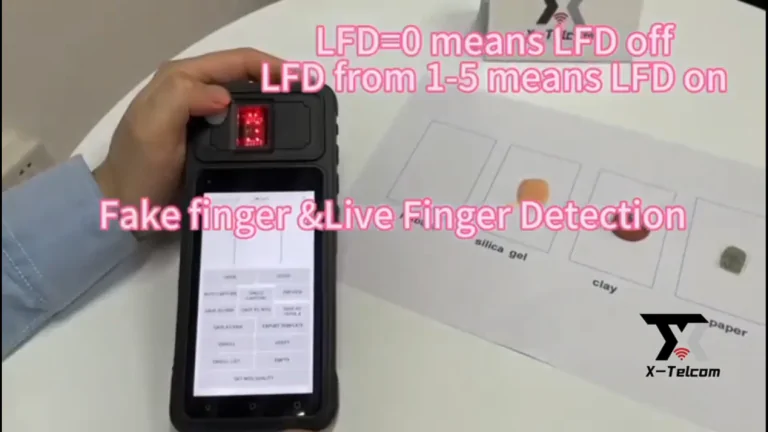
The system should also be capable of distinguishing a genuine living palm from attempts to reproduce or imitate biometric characteristics.
For this reason, anti-spoofing and liveness detection should be evaluated as part of the biometric security architecture.
3. Biometric Data Privacy
Privacy is one of the biggest considerations surrounding biometric payment.
A well-designed palm vein system should not depend on storing conventional photographs of a user’s palm for authentication.
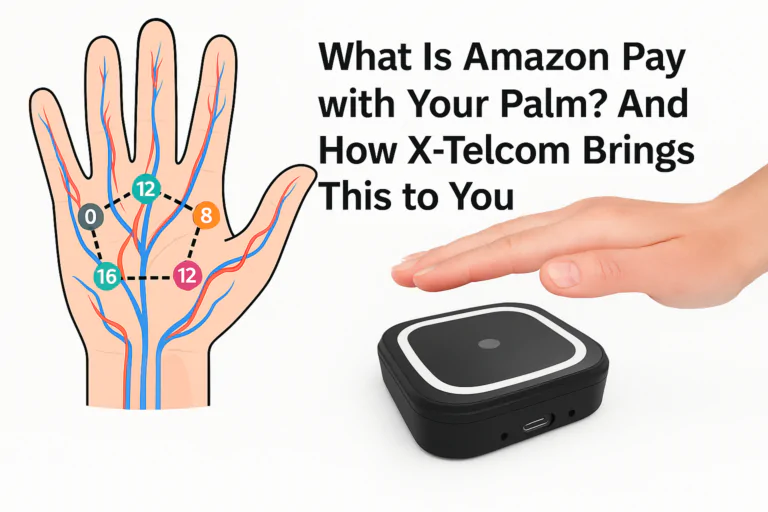
With the X-Telcom palm vein architecture, biometric characteristics are converted into mathematical biometric templates for matching.
FinTech companies should also understand:
Where are biometric templates stored? Who controls the server? Can the biometric technology provider access customer data?
X-Telcom supports deployment within the partner’s private server environment, allowing the FinTech partner to maintain control over its user environment and infrastructure.
4. Local Matching vs Cloud-Based Palm Vein Verification
Local matching may be suitable for smaller standalone applications, but payment networks can quickly grow beyond the practical capacity of individual terminals.
Imagine a payment network with:
- 500 terminals
- 100,000 registered users
- Multiple merchants
- Multiple cities
- Potentially millions of future users
For scalable payment projects, server-based or cloud-based palm vein verification provides a more practical architecture.
The terminal captures the required biometric information, while identity verification is performed against the centrally deployed biometric algorithm.
This enables FinTech companies to build a unified biometric identity across their payment network.
5. API and SDK Integration
A palm vein payment terminal should not require a FinTech company to replace its existing payment platform.
Technical teams should evaluate:
- Android SDK availability
- API documentation
- Enrollment APIs
- Verification APIs
- User ID management
- Server deployment requirements
- Sample applications
- Integration support
The objective is straightforward:
Add palm authentication to the existing payment workflow rather than rebuild the payment infrastructure around the biometric device.
X-Telcom provides the hardware, SDK/API and biometric algorithm capabilities, while partners can develop and control their own payment applications and business logic.
6. Can the Solution Scale Beyond the MVP?
Many biometric projects work well with a small number of test users.
The real challenge begins when the project becomes successful.
FinTech companies should ask:
What happens when we move from 1,000 users to 100,000 or 1 million users?
Algorithm architecture, server resources, query performance and licensing all become important.
X-Telcom provides a free small-scale algorithm supporting up to 10,000 User IDs for initial development and testing.
For qualified strategic partners progressing from MVP towards commercial deployment, X-Telcom can also provide a temporary 50,000–100,000 User ID large-scale algorithm license for 3 months, deployed on the partner’s private server.
7. Understand the License Model Before Deployment
Before commercial deployment, FinTech companies should understand:
- Is the license charged per device or user?
- Is there an annual license fee?
- Is the server license perpetual?
- Can the architecture scale to millions of users?
- Are separate server deployments independently licensed?
These questions can have a major impact on the economics of a nationwide biometric payment project.
X-Telcom’s large-scale algorithm is available through a one-time license model with perpetual usage and no recurring annual algorithm license fee.
8. Payment Hardware Is Different from General Biometric Hardware
A palm scanner and a payment terminal are not necessarily the same thing.
FinTech customers may need to consider:
- NFC
- EMV/payment card interaction
- Android application integration
- Secure communications
- Payment backend connectivity
- Device management
- Network connectivity
- Transaction workflow
This is why X-Telcom focuses its palm vein technology primarily on payment and FinTech applications, rather than trying to position one biometric architecture for every industry.
9. Hardware Supply and Commercial Scalability
A FinTech company may start with a few samples, move to 100 devices for an MVP and eventually require thousands of terminals.
Before choosing a supplier, consider:
- Manufacturing capacity
- Component availability
- Production lead time
- Warranty
- Technical support
- Hardware roadmap
- SDK continuity
- Algorithm scalability
The cheapest prototype is not necessarily the lowest-cost solution once a project reaches commercial deployment.
From MVP to Large-Scale Palm Payment
The right question is not simply:
"Which palm scanner should we buy?"
The better question is:
"Which architecture can integrate with our existing payment ecosystem today and still support us when the project grows to hundreds of thousands or millions of users?"
At X-Telcom, we help FinTech companies and payment providers build a clear path:
Hardware Testing → SDK/API Integration → MVP → Private Server Deployment → Large-Scale Commercial Palm Payment
Our solutions include:
- AirOne Palm Payment Terminal
- WavePass500 Palm Vein Terminal
- PalmVein01 Series Palm Vein Scanners
- Palm vein SDK/API
- Private server deployment
- Small and large-scale palm vein recognition algorithms
If your company is developing a palm payment, biometric payment, digital wallet, banking or FinTech project, contact X-Telcom to discuss your MVP and deployment requirements.
X-Telcom
Palm Vein Technology for the Next Generation of Payments
Frequently Asked Questions
What is a palm vein payment solution?
A palm vein payment solution uses the unique vein characteristics inside a user’s palm as a biometric identifier. The biometric identity can be linked with a payment account, digital wallet or other payment credential, allowing users to authenticate transactions using their palm.
Can palm vein recognition integrate with an existing payment platform?
Yes. X-Telcom provides SDK and API capabilities that allow FinTech companies to integrate palm enrollment and verification into their existing applications and payment infrastructure.
Can palm vein verification be deployed on a private server?
Yes. X-Telcom supports private server deployment, allowing partners to operate the biometric algorithm within their own server environment.
How many users can the X-Telcom palm vein algorithm support?
For initial development and testing, X-Telcom provides a small-scale algorithm supporting up to 10,000 User IDs. Large-scale algorithm packages are available for projects requiring significantly larger user populations.
Is there an annual license fee for the large-scale algorithm?
X-Telcom’s large-scale algorithm is available with a one-time license fee and perpetual usage, without recurring annual algorithm license fees.
Learn More from: https://x-telcom.com/palm-payment-china-solution/