
Introduction
As palm vein biometric systems move from pilot projects to large-scale deployment, one key question often comes up:
What is the difference between small model and large model palm vein algorithms?
More importantly:
👉 How do you scale from thousands to millions of users without rebuilding your system?
This blog explains how palm vein technology is designed to support both MVP testing and large-scale biometric deployment, using a flexible and scalable algorithm architecture.
What Is a Palm Vein Algorithm Model?
A palm vein algorithm model refers to the biometric recognition engine used to:
- Extract palm vein features
- Perform identity matching
- Handle database comparison
In practical deployment, this is typically divided into two stages:
- Small Model (MVP Stage)
- Large Scale Model (Production Stage)
Small Model: Built for Fast MVP Deployment
The small model is designed for early-stage testing and validation.
Key Features
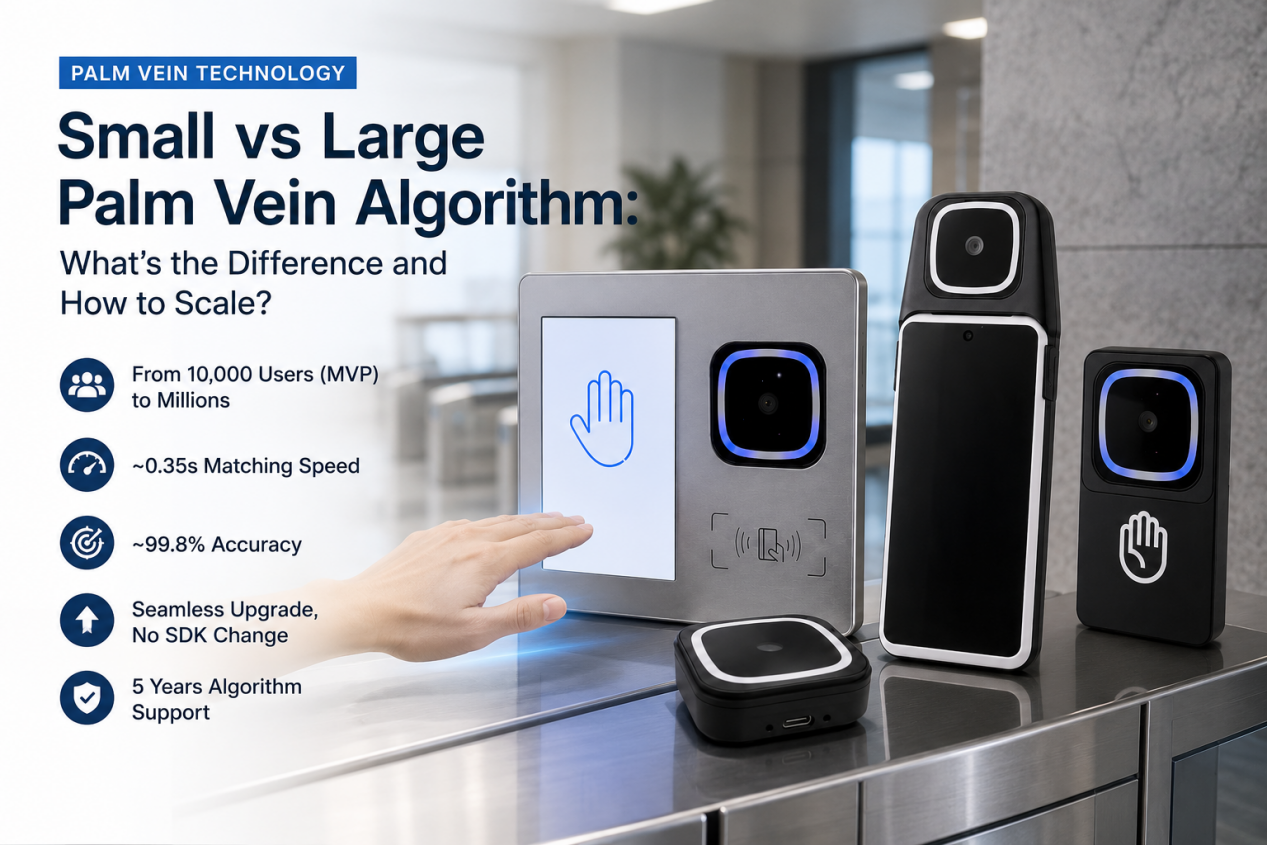
- Supports up to 10,000 users
- Lightweight architecture
- Faster deployment
- Lower infrastructure requirements
Why It Matters
For most businesses, launching a biometric project starts with:
- Pilot programs
- Proof of concept (PoC)
- Internal testing
The small model allows teams to:
- Start quickly
- Reduce upfront cost
- Validate real-world use cases
Cost Advantage
👉 Many platforms offer free ID license (up to 10,000 users) for MVP stage
This significantly lowers the barrier to entry.
Large Scale Model: Built for Real-World Deployment
Once the system moves beyond testing, the large model becomes essential.
Key Features
- Supports 100K to millions of users
- Designed for high concurrency
- Requires GPU + vector database architecture
Real Performance
In large-scale environments:
- ~0.35 seconds matching speed
- ~99.8% accuracy
This ensures:
- Real-time authentication
- Stable performance under heavy load
The Key Difference: Scalability
| Aspect | Small Model | Large Scale Model |
|---|---|---|
| Users | Up to 10K | 100K to millions |
| Purpose | Testing / MVP | Production |
| Infrastructure | Lightweight | GPU + scalable backend |
| Performance | Basic | High-performance |
Seamless Upgrade: No System Rebuild
One of the biggest advantages of palm vein systems is:
👉 You can upgrade from small to large model without rebuilding your system
What Does That Mean?
- No SDK changes required
- No application redesign
- No need to re-enroll users
Key Requirement
👉 RGB + IR images must be stored during registration
This allows:
- Feature re-extraction
- Algorithm upgrade
- smooth transition to large scale
Flexible Licensing Model
Palm vein systems typically use ID-based licensing:
- Each user = 1 ID
- System capacity = total licensed IDs
- Deleting users frees IDs for reuse
Why This Matters
- No transaction-based cost
- Predictable scaling cost
- Efficient license usage
Development and Testing Support
To support integration:
👉 Test environments are provided after sample device purchase
Including:
- Small model test server
- Large model test server
- API debugging support
Result
- Faster development
- Lower project risk
- Better system validation
Long-Term Support and Ownership
For enterprise deployment, control matters.
A well-designed system provides:
- 3–5 years algorithm support
- Deployment on customer-owned servers
- Full control over biometric data
Key Benefit
👉 No vendor lock-in
👉 No dependency on external systems
Conclusion
The difference between small and large palm vein algorithm models is not just technical.
It is about how your biometric system grows.
- Small model helps you start
- Large model helps you scale
Final Thought
Start small, scale fast, and deploy with confidence.
Palm vein technology is designed for growth from day one.
CTA
If you are planning a biometric system and want to understand how to scale from MVP to millions: