
Introduction
In palm vein recognition systems, most discussions focus on algorithms and matching accuracy.
However, one critical factor is often overlooked:
How the biometric data is captured in the first place.
Without consistent and controlled image acquisition, even the most advanced algorithms cannot deliver reliable results.
This is where X-Telcom introduces a key hardware innovation:
PSensor – a dedicated distance detection module.
What Is PSensor in Palm Vein Hardware?
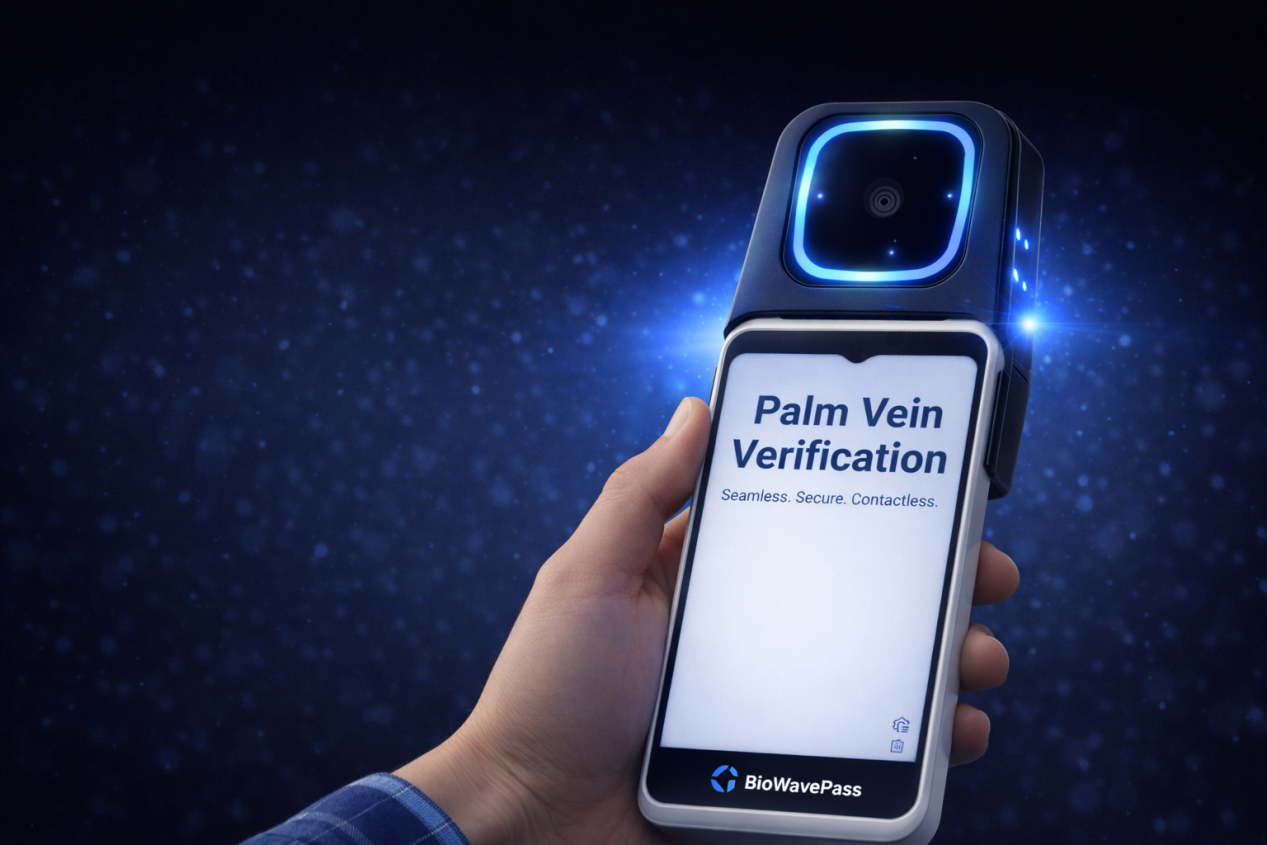
PSensor is a built-in module designed to detect the real-time distance between the user’s palm and the device.
- Detection range: 0–2000 mm
- Optimal recognition range: 50–150 mm
Unlike traditional biometric devices that rely on user behavior, PSensor ensures that every scan happens under standardized conditions.
This transforms palm vein recognition from a “user-dependent process” into a hardware-controlled system.
Why Distance Matters in Palm Vein Recognition
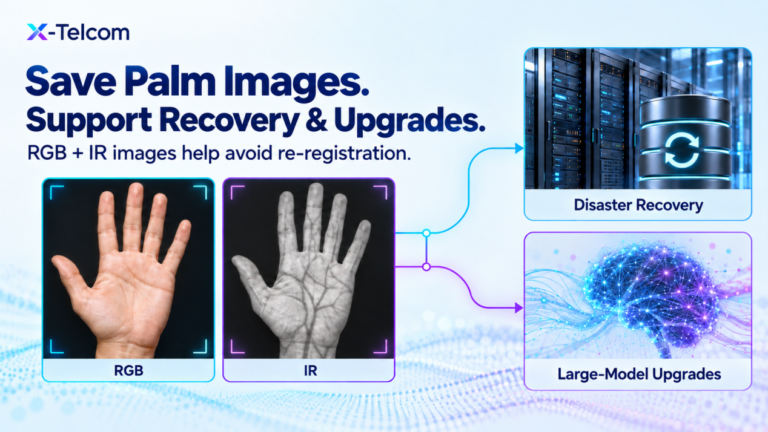
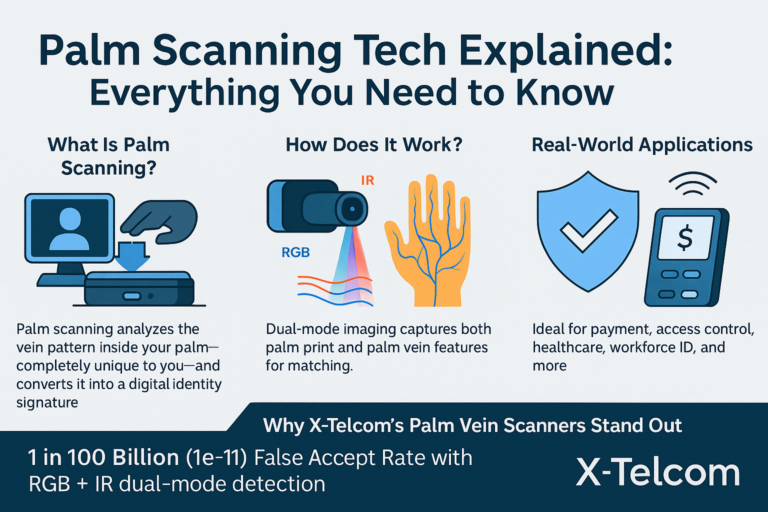
Palm vein recognition relies on capturing both:
- RGB features (palm surface)
- IR features (sub-dermal vein patterns)
These require:
- Stable focus
- Controlled lighting
- Correct positioning
If the palm is:
- Too close (<50 mm) → Image distortion and overexposure
- Too far (>150 mm) → Loss of detail and reduced feature quality
Without proper distance control:
- Recognition accuracy becomes inconsistent
- False rejections increase
- System performance degrades at scale
How PSensor Ensures Stable Image Capture
PSensor acts as a real-time control layer, continuously monitoring distance and coordinating device behavior.
Key Capabilities:
- Defines the optimal capture zone (50–150 mm)
- Prevents invalid scans (too close or too far)
- Synchronizes:
- Lighting activation
- Image capture timing
- RGB + IR data acquisition
This ensures every captured image meets the quality standards required for high-accuracy recognition.
Intelligent Interaction Through Hardware Feedback
Beyond detection, PSensor enhances user interaction through intuitive feedback:
- Blue breathing light → Standby (no hand detected)
- Yellow-green flashing → Distance too close (<50 mm)
- White fill light → Optimal range (ready for capture)
This creates a natural user flow:
- No training required
- Immediate visual guidance
- Faster and smoother verification
Improving User Experience and System Performance
By combining distance detection with real-time feedback, PSensor delivers measurable improvements:
For Users:
- Easier positioning
- Fewer failed attempts
- Faster interaction
For Systems:
- More consistent image quality
- Higher recognition success rate
- Reduced operational errors
Performance Outcome:
- Recognition speed: ~0.3 seconds
- Stable performance even in low-light environments
A Key Advantage for Large-Scale Deployments
In large-scale applications such as:
- Palm vein payment systems
- eKYC identity verification
- Banking and fintech platforms
Consistency is more important than peak performance.
PSensor ensures:
- Every user interaction follows the same capture standard
- Data quality remains stable across millions of users
- The system scales without accuracy degradation
Conclusion
In palm vein recognition:
Algorithms determine accuracy —
but hardware determines consistency.
PSensor bridges this gap by acting as a control layer between user behavior and algorithm performance.
It ensures:
- Correct distance
- Stable image capture
- Intelligent interaction
This is why PSensor is not just a feature, but a core competitive advantage of X-Telcom palm vein hardware.
Learn More
Explore how X-Telcom enables next-generation biometric systems: