
The global payments industry is rapidly evolving beyond cards, passwords, and mobile phones. As financial institutions search for more secure and convenient authentication methods, palm biometrics are emerging as one of the most promising technologies for the next generation of digital payments.
From digital wallets and banking applications to government identity programs and merchant payments, organizations are increasingly exploring how palm recognition can improve security while creating a frictionless user experience.
However, one important question continues to arise:
Should a palm device simply authenticate a user, or should it also function as a payment terminal?
The Rise of Palm-Based Authentication
Unlike traditional passwords or PIN codes, palm biometrics are difficult to forget, lose, or share. Modern systems can analyze unique biological characteristics of an individual’s hand, allowing users to authenticate themselves simply by presenting their palm.
For financial applications, biometric authentication offers several advantages:
- Faster customer verification
- Improved user experience
- Reduced fraud risk
- Stronger identity assurance
- Lower dependency on physical cards and passwords
As digital identity becomes increasingly important, many organizations are looking at palm biometrics as a foundation for secure customer authentication.
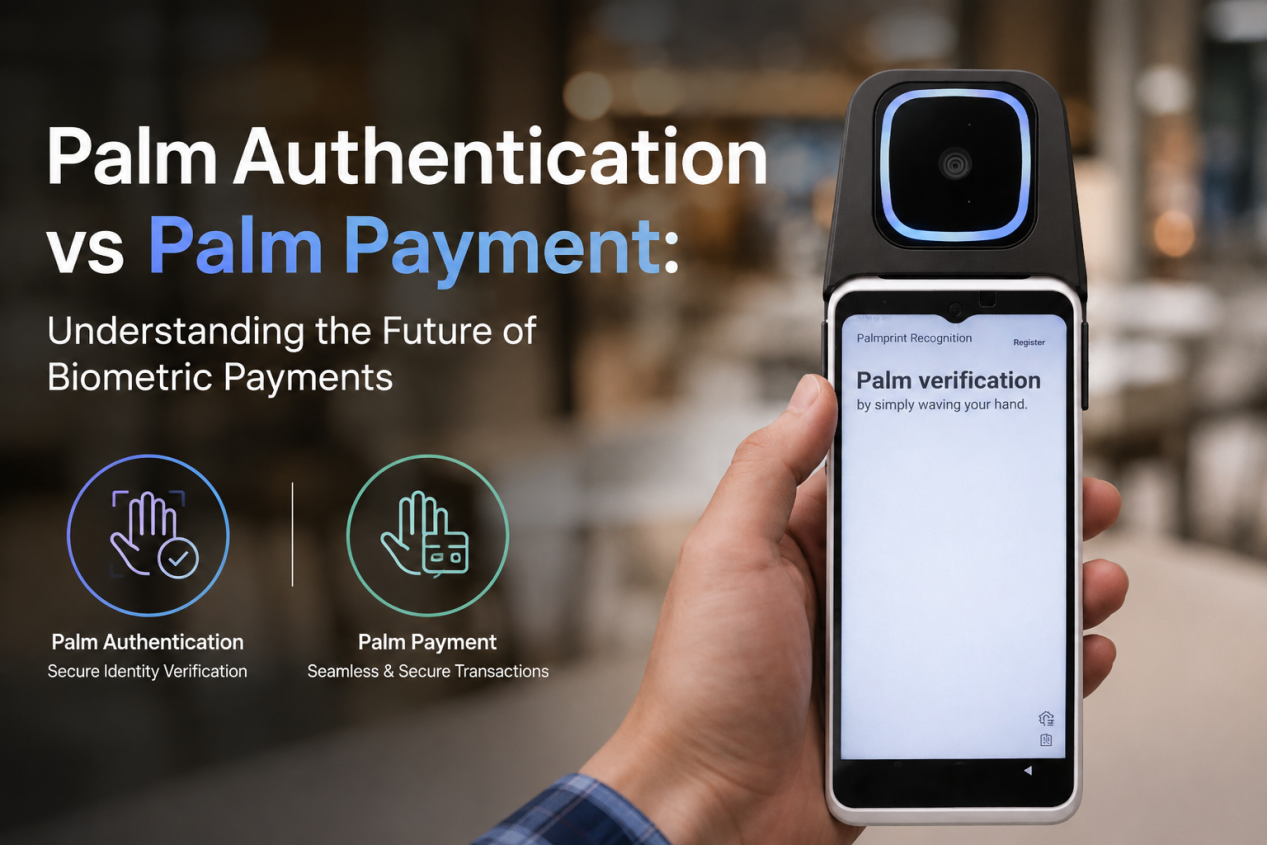
Authentication and Payment Are Not the Same Thing
One common misconception is that every Palm Pay device must operate as a payment terminal.
In reality, successful deployments often separate these functions.
The first function is identity authentication.
The second function is payment acceptance and transaction processing.
A biometric device may verify who the user is, while a bank, wallet provider, or payment platform processes the actual transaction.
This separation provides greater flexibility and allows organizations to maintain control over their existing payment infrastructure.
Palm Authentication Platforms
Palm Authentication Platforms are designed to answer a simple question:
Who is the user?
These platforms focus on:
- User enrollment
- Identity verification
- e-KYC
- Digital identity management
- Wallet authentication
- Account linking
The payment transaction itself is handled by existing banking or payment systems.
This architecture is particularly attractive for:
- Banks
- Government identity programs
- Digital wallets
- Healthcare systems
- Customer onboarding platforms
Typical Authentication Flow
User Authentication
↓
Palm Authentication Device
↓
Identity Verification Platform
↓
Bank Account / Wallet Mapping
↓
Existing Payment Infrastructure
↓
Transaction Completed
Palm Payment Platforms
Palm Payment Platforms extend beyond authentication.
In addition to verifying identity, they support payment-related workflows such as:
- Merchant payments
- Wallet payments
- QR payments
- NFC interactions
- Retail payment experiences
This approach is often preferred by organizations building new payment networks or deploying biometric payment experiences directly at the point of sale.
Typical Payment Flow
User Authentication
↓
Palm Payment Device
↓
Wallet Mapping
↓
Payment Application
↓
Payment Authorization
↓
Transaction Completed
Why Palm Vein Alone Is No Longer Enough
Traditional palm biometric systems often rely exclusively on palm vein recognition.
While highly secure, modern financial applications increasingly demand additional layers of verification.
Palm Vein + Palm Print Recognition
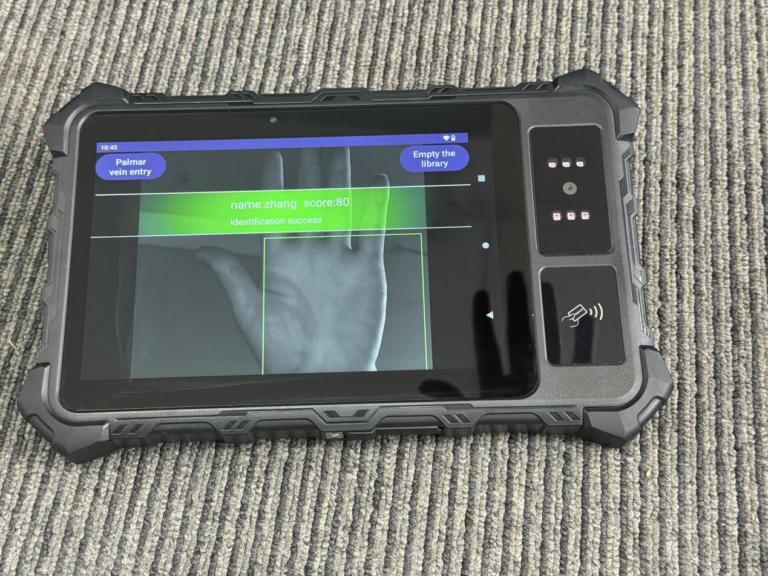
By analyzing both internal vein patterns and external palm characteristics, the system gains access to two independent biometric datasets from a single user interaction.
This dual-modality approach provides:
- Enhanced identity confidence
- Improved liveness detection
- Stronger anti-spoofing protection
- Better performance in real-world deployments
- Increased suitability for financial-grade authentication
Palm Vein Only vs Palm Vein + Palm Print
| Capability | Palm Vein Only | Palm Vein + Palm Print |
|---|---|---|
| Security | High | Higher |
| Anti-Spoofing | High | Higher |
| Liveness Detection | Good | Enhanced |
| Banking Authentication | Good | Recommended |
| Palm Payment | Good | Recommended |
For banks and fintech organizations, this additional layer of verification can significantly strengthen the overall security posture of a Palm Pay ecosystem.
Building a Future-Ready Palm Pay Ecosystem
As biometric payments continue to evolve, organizations should evaluate hardware platforms based on more than recognition performance alone.
Important considerations include:
- Open Android architecture
- SDK and API availability
- Integration flexibility
- NFC capabilities
- Cloud deployment support
- Scalability
- Long-term supplier support
The most successful projects are those that view palm biometrics as part of a larger digital identity and payment ecosystem rather than simply another authentication device.
The Road Ahead
The future of payments will be shaped by technologies that combine convenience, security, and user trust.
Palm biometrics offer a unique opportunity to reduce friction while strengthening identity verification across banking, fintech, government, and retail environments.
Whether deployed as an authentication platform or integrated into a complete payment solution, palm recognition is positioned to become one of the defining technologies of next-generation digital commerce.
Organizations that invest in scalable, open, and future-ready biometric platforms today will be better positioned to lead the transformation of digital identity and payment experiences tomorrow.
Conclusion
Choosing between a Palm Authentication Platform and a Palm Payment Platform depends on your business objectives.
If your goal is secure identity verification before payment, an authentication-focused architecture may be the ideal choice. Just like WavePass500.
If your goal is to combine biometric authentication with payment acceptance, a payment-ready platform can help deliver a seamless customer experience, can go with AirOne directly.
As adoption accelerates worldwide, organizations that make the right architectural decisions today will be better prepared for the future of biometric payments.
Learn more from: https://x-telcom.com/palm-pay-hardware-solution/