
Palm Vein Payment POS Solution for Digital Wallet Integration
Enable secure, contactless palm payment authentication by linking palm vein biometric identity with digital wallets, customer accounts, payment accounts, or tokenized card systems.
X-Telcom provides palm vein POS hardware, biometric SDK, matching algorithms, and integration-ready technology for banks, fintech companies, wallet providers, payment platforms, and software solution companies.
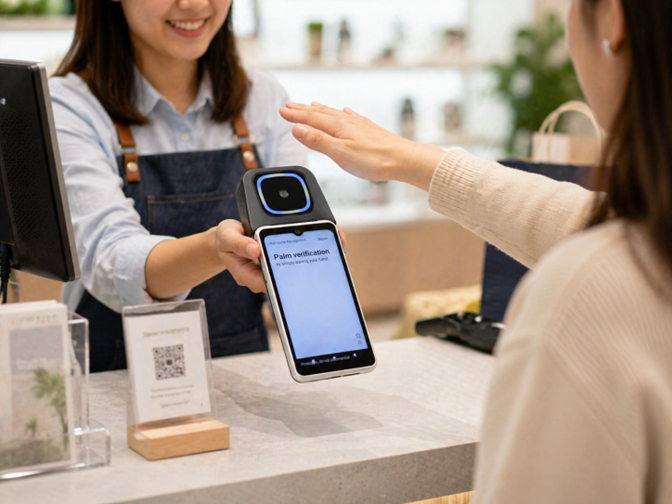
What Is a Palm Vein Payment POS Solution?
A Palm Vein Payment POS Solution allows users to complete payment authentication by presenting their palm at a POS terminal.
Instead of tapping a physical card, scanning a QR code, or using a mobile NFC wallet, the user's palm becomes a secure biometric identity key.
The palm vein system identifies the user. The bank, wallet provider, fintech platform, or payment processor then decides which payment account, wallet ID, or tokenized card reference should be used for the transaction.
Important Clarification:
X-Telcom does not replace the customer's payment platform. X-Telcom provides the biometric identity layer that can be integrated into the customer's existing payment, wallet, or POS ecosystem.
Simple explanation: Palm vein identifies the user. The payment platform completes the payment.
How Palm Vein Links to a Digital Wallet
Palm vein payment does not mean the POS directly pulls card information from the user's mobile wallet.
Instead, palm vein recognition works as an identity authentication layer. During registration, the user's palm vein biometric ID can be linked inside the customer's system to a wallet account, customer account ID, bank account reference, payment account, tokenized card reference, membership account, or internal user profile.
When the user presents their palm at the POS, the palm vein system verifies the user identity. After successful identification, the customer's backend system maps that identity to the correct wallet account or payment token.
This keeps biometric identity and payment credentials logically separated.
Possible Binding References During Registration:
- • Digital wallet account
- • Customer account ID
- • Bank account reference
- • Payment account
- • Tokenized card reference
- • Membership account
- • Internal user profile
Typical Palm Payment Flow
Registration Flow
The user registers their palm vein biometric data through the approved registration system.
The system creates a palm biometric ID.
The palm ID is linked to the user's wallet account, payment account, customer ID, or tokenized card reference.
The mapping is stored inside the customer's own backend system.
Palm vein data and photos are encrypted with AES-256 and stored only on the customer's own system.
Payment Flow
The user presents their palm at the POS terminal.
The palm vein device captures palm image and feature data.
The POS sends the verification request to the biometric matching server.
The server identifies the user and returns the matched user ID or palm ID.
The customer's backend system finds the linked wallet account or tokenized card reference.
The payment platform or processor authorizes the transaction.
The POS receives the payment result.
X-Telcom Scope vs Customer Platform Scope
X-Telcom provides the biometric identity layer, while the customer controls the wallet and payment system.
X-Telcom Provides
- ✓ Palm vein POS hardware
- ✓ Android palm vein terminal
- ✓ USB palm vein reader
- ✓ Palm vein SDK
- ✓ Matching algorithm
- ✓ API and technical documentation
- ✓ Remote engineering support
- ✓ Sample testing support
- ✓ Device integration support
Customer Platform Controls
- ✓ Digital wallet account
- ✓ Card tokenization
- ✓ Payment account binding
- ✓ Transaction authorization
- ✓ Payment gateway connection
- ✓ Risk control
- ✓ Settlement
- ✓ User account database
- ✓ Regulatory compliance
🚨 Important Separation of Responsibilities
X-Telcom does not provide digital wallet accounts, card tokenization, payment processing, or settlement services.
This separation allows the customer to keep full control of their financial system, user accounts, and compliance framework.
Secure Architecture and Recommended Devices
Security Architecture
A secure palm payment architecture should avoid storing sensitive card data inside the POS terminal.
The POS only captures palm biometric data and submits an authentication request. The wallet account, card token, payment credential, and transaction authorization remain inside the customer-controlled payment platform.
All palm vein data and photos are encrypted with AES-256 and stored only on the customer's own system. X-Telcom does not participate in any data management. The customer owns and controls the system and data, with full compliance and GDPR-aligned deployment.
Recommended Palm Payment Devices
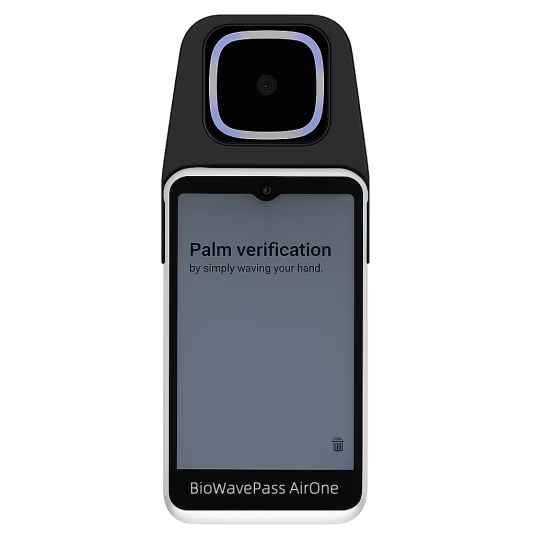
AirOne EMV/PCI Certified Mobile Palm Payment POS
Designed for mobile palm payment and e-KYC scenarios. Suitable for fintech platforms, mobile payment service providers, agent banking, and field registration projects.
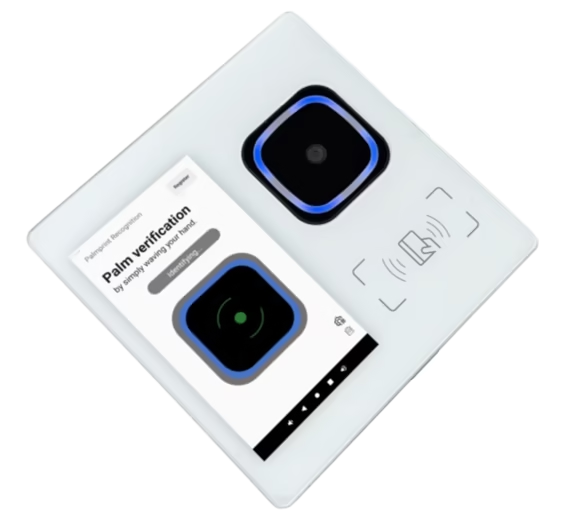
WavePass500 Android Palm Vein Terminal
A fixed Android palm vein recognition terminal for retail counters, cashier systems, campus payment, employee verification, and fixed service points.
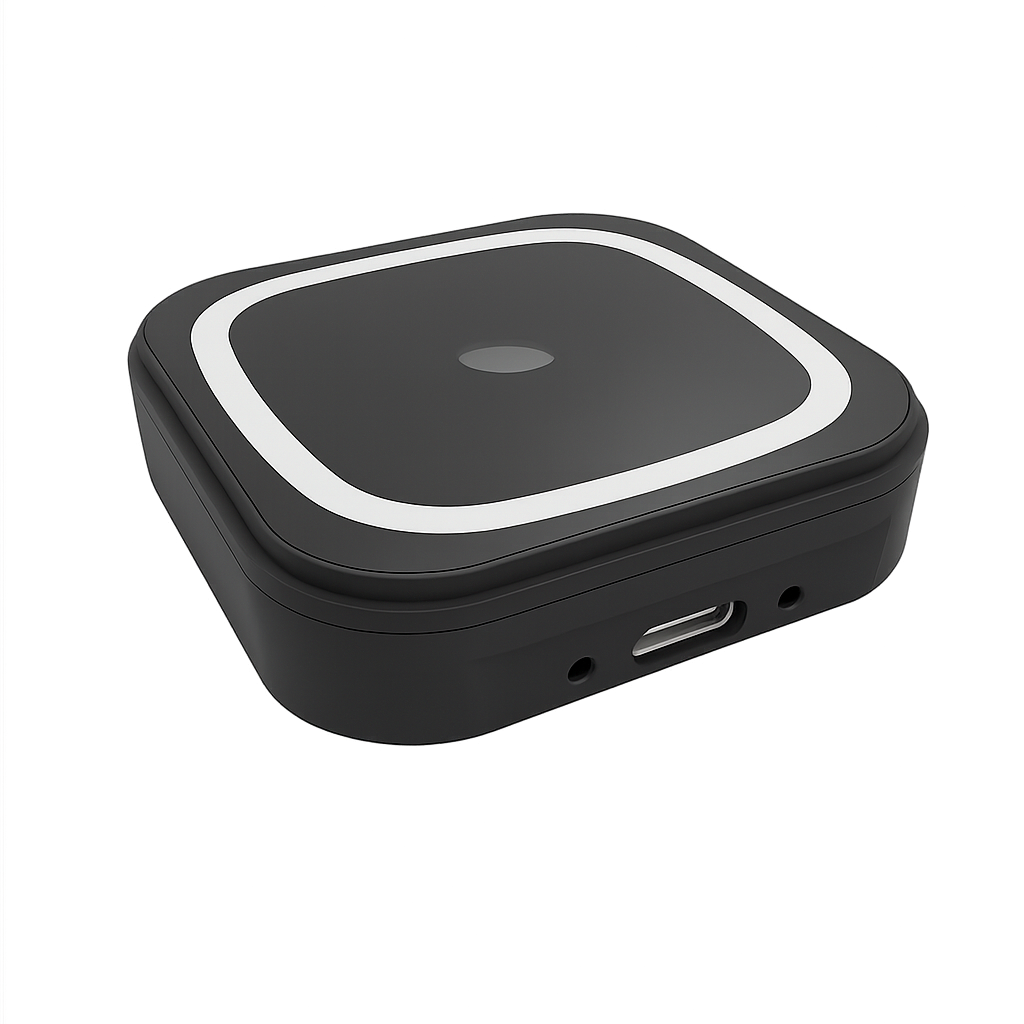
PalmVein01 USB Palm Vein Reader
A compact USB palm vein reader for integration with kiosks, ATMs, self-service terminals, banking terminals, and existing POS hardware.
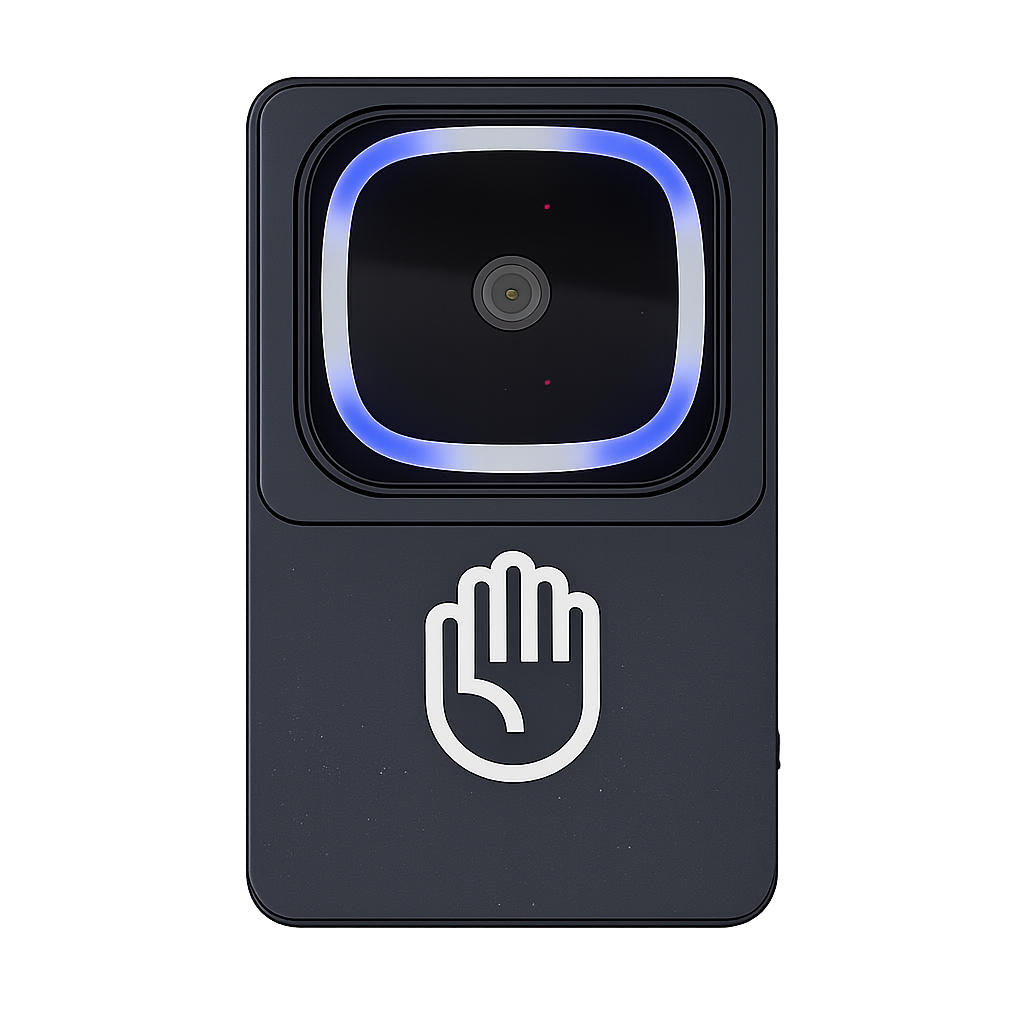
PalmVein01 Pro USB Palm Vein Scanner with Battery
A self-powered RGB + IR palm vein scanner designed for Windows, Linux, and Android systems. It connects via USB for data communication while relying on its built-in battery for stable power, effectively avoiding USB power limitations and ensuring reliable operation in demanding environments.
Build Your Own Palm Payment Solution
Build your own palm payment solution with X-Telcom palm vein hardware, SDK, algorithm support, and technical integration guidance.
Contact X-Telcom for Palm Payment Integration