
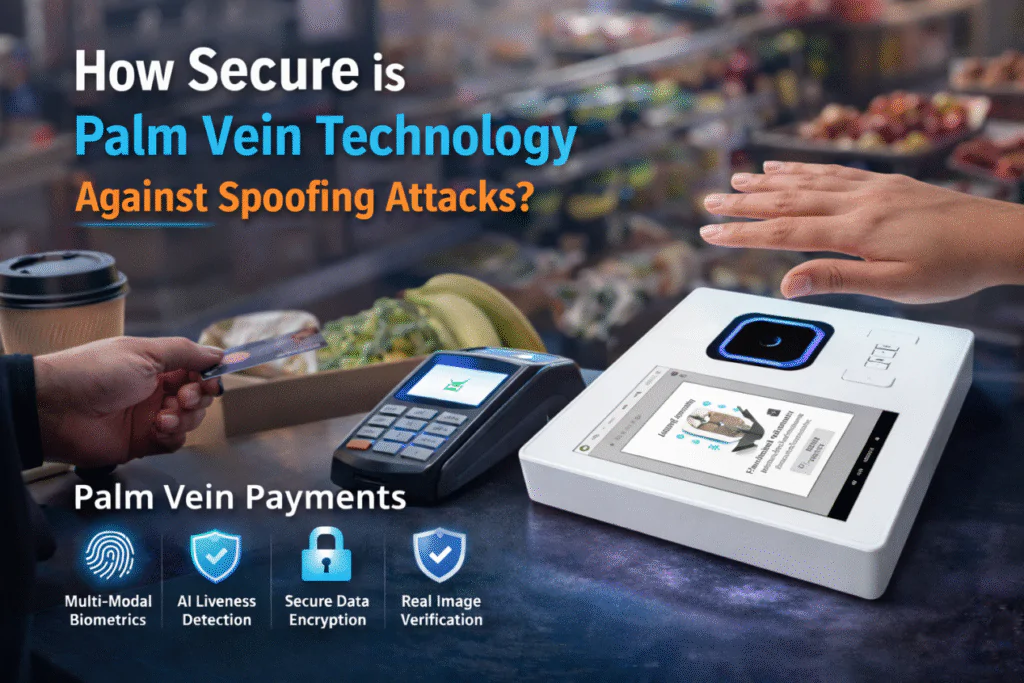
Biometric authentication is becoming a core technology in modern financial systems, digital identity platforms, and secure access control environments. Among the newest biometric technologies gaining attention worldwide is Palm Vein recognition.
Palm Vein biometrics offer a powerful combination of high security, contactless user experience, and fast authentication, making the technology increasingly popular for applications such as payments, banking authentication, government identity systems, healthcare access, and enterprise security.
However, a common question asked by banks, fintech companies, and system integrators is:
Can Palm Vein biometrics be spoofed?
This article explains the potential spoofing risks and how X-Telcom Palm Vein technology is designed to prevent biometric fraud.
What Is Palm Vein Biometric Authentication?
Palm Vein authentication works by capturing the unique vein patterns beneath the skin of a person’s palm using near-infrared (IR) imaging technology.
When near-infrared light is projected onto the palm, hemoglobin in the blood absorbs the light, allowing the device to capture the vascular pattern inside the hand.
These vein patterns are then converted into encrypted biometric features used for identity verification.
Unlike traditional biometric systems that rely on external characteristics, Palm Vein recognition analyzes sub-surface biological structures, which are extremely difficult to replicate.
Common Biometric Spoofing Attempts
Attackers sometimes attempt to bypass biometric systems by replicating biometric features using images, artificial models, or digital replay methods.
Below are some common spoofing techniques and why they are ineffective against modern Palm Vein systems.
| Attack Method | Attack Cost | Risk Level | Why It Fails |
|---|---|---|---|
| Printed Palm Image | Low | Very Low | Only RGB palm image. No vein structure detected under infrared scanning. |
| Printed Vein Image | Low | Very Low | Lacks the palmprint layer. Systems verify both palmprint and vein simultaneously. |
| Screen Replay Attack | Low | Very Low | Phone screens emit visible light, not near-infrared required for vein imaging. |
| Paper + Real Hand Hybrid | Low–Medium | Low | Mixed biometric signals create inconsistent RGB/IR patterns detectable by AI. |
| Glove Attack | Medium | Low | Synthetic materials create abnormal skin texture and infrared response. |
| 3D Printed Palm Model | High | Medium | Silicone or printed models lack dynamic blood flow and real skin characteristics. |
| Feature Reconstruction (AI) | High | Low | Biometric feature templates are encrypted and mathematically irreversible. |
| Animal Skin Spoof | Very High | Low | Biological differences and absence of real vascular dynamics are detectable. |
Most spoofing attempts fail because Palm Vein technology analyzes both surface and sub-surface biometric information simultaneously.
Multi-Layer Security in X-Telcom Palm Vein Systems
X-Telcom Palm Vein devices are designed with several layers of security to protect against biometric spoofing.
Dual Biometric Capture: RGB + IR
X-Telcom devices capture both:
- RGB palmprint images
- Infrared palm vein patterns
The system analyzes both data sources independently and combines them for authentication.
Because both layers must match, spoofing attempts using a single type of biometric image cannot pass verification.
AI-Based Liveness Detection
Advanced AI models analyze biometric data to detect signs of spoofing, including:
- Abnormal skin textures
- Artificial materials
- Inconsistent infrared reflections
- Static or synthetic biometric patterns
This allows the system to detect printed images, silicone hands, gloves, or other fake artifacts.
High-Performance Recognition Algorithm
X-Telcom Palm Vein technology captures RGB + IR feature points simultaneously and supports large-scale biometric identity databases.
The system has been tested with databases containing up to 5 million identities, achieving:
- 99% authentication success rate
- matching speed as fast as 0.35 seconds
This high-performance architecture ensures fast and accurate identification even in large deployments.
Secure Biometric Data Protection
All palm vein images and biometric features are encrypted using AES-256 encryption.
Importantly:
- X-Telcom devices do not store biometric data locally
- All biometric images and templates are stored only on the customer’s own server or cloud infrastructure
- X-Telcom does not participate in any biometric data management
This architecture ensures strong data sovereignty, privacy protection, and regulatory compliance.
Why Palm Vein Biometrics Are Hard to Spoof
Palm Vein recognition is considered one of the most secure biometric technologies because it relies on biological features that are extremely difficult to replicate.
The technology offers several natural advantages:
- Vein patterns are hidden beneath the skin
- They are unique to every individual
- They require near-infrared imaging to capture
- They are linked to living biological tissue
Because of these factors, creating a fake palm vein pattern that can successfully pass authentication is extremely difficult.
Real-World Applications
Palm Vein technology is now being deployed in multiple industries, including:
Financial services
Secure authentication for banking transactions and payment terminals.
Biometric payments
Contactless payment systems where users authenticate with their palm instead of cards or mobile phones.
Healthcare systems
Patient identification and medical record access.
Government identity programs
National ID and welfare distribution systems.
Enterprise access control
Secure building and facility entry.
The Future of Biometric Security
As digital identity systems expand and biometric payments become more common, organizations require technologies that deliver both strong security and seamless user experience.
Palm Vein recognition is emerging as one of the most promising biometric solutions because it combines:
- High security
- Fast authentication
- Contactless interaction
- Privacy-focused architecture
X-Telcom Palm Vein technology is designed to support next-generation biometric identity systems and secure digital transactions worldwide.
Learn more about X-Telcom Palm Vein solutions:
https://x-telcom.com/palm-vein-reader/